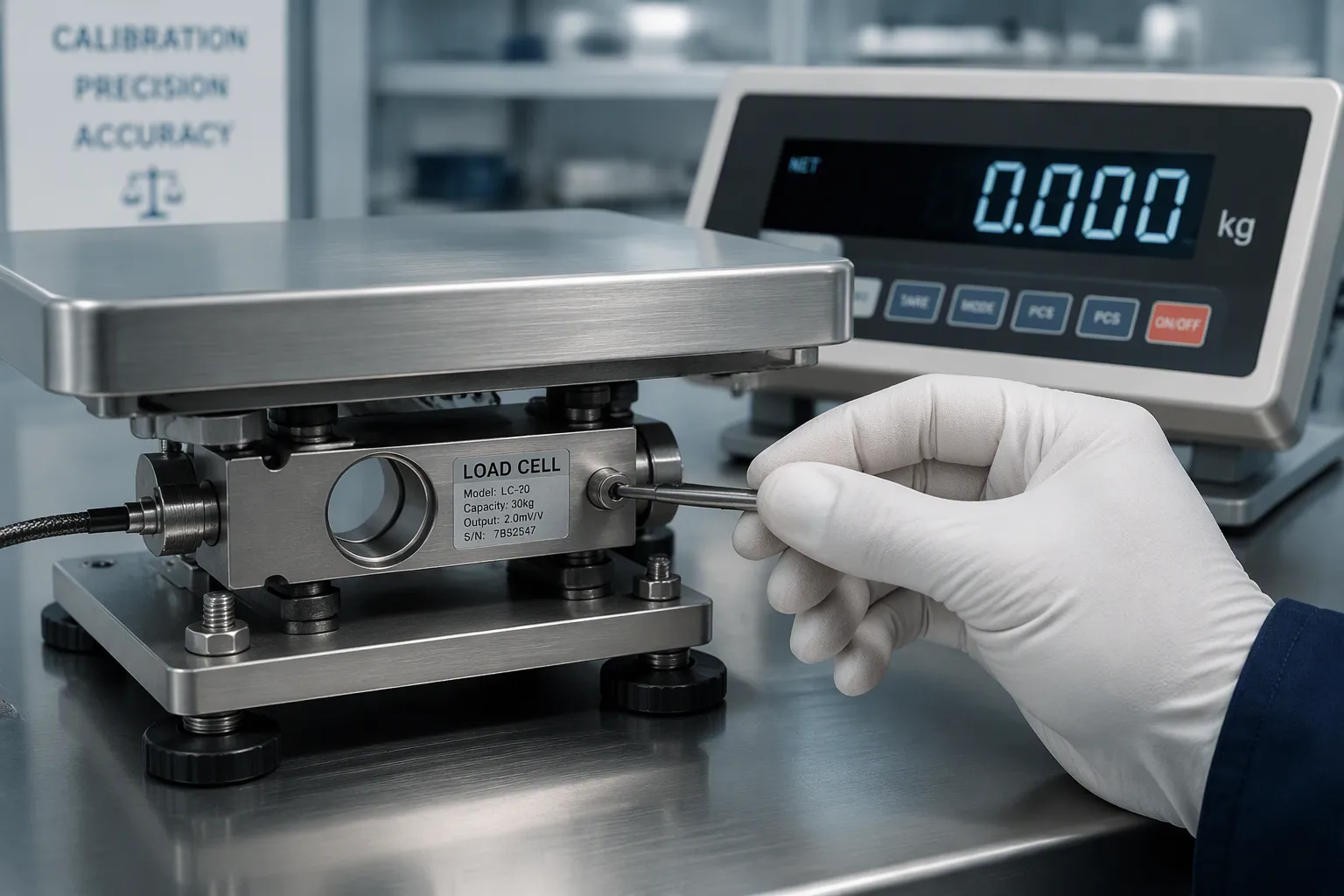
A pharmaceutical technician measures a critical ingredient. Even a tiny error can ruin a whole batch. This moment shows why exact weight measurement matters. A load cell makes this possible. This device turns mechanical force into an electrical signal. These parts are the heart of accurate weighing systems. They directly decide measurement precision, reliability, and safety. Engineers and technicians who understand load cells gain control over their weighing system performance. This knowledge supports accurate weighing across many industries. Professionals in precise industrial weighing know that load cell selection and care affect every measurement. The accuracy of any load cell depends on proper application and maintenance.
Key Takeaways
Load cells change mechanical force into electrical signals to measure weight accurately.
Strain gauges and the Wheatstone bridge find tiny changes in shape and make a voltage you can measure.
Pick the right load cell type by looking at capacity, accuracy, and the conditions around it.
Installing it correctly and taking care of it often stops signal drift, misalignment, and interference.
Digital load cells can check themselves and watch things in real time to help with predictive maintenance.
How Load Cells Work in Accurate Weighing Systems
A load cell in a weighing machine depends on a simple physical fact. Metal bends when a force pushes or pulls on it. The inside of a load cell uses this tiny bend to make a signal you can measure. Knowing load cell anatomy helps technicians find problems and improve accuracy.
Strain Gauges and the Wheatstone Bridge
A strain gauge is a small electrical conductor glued to a film in a zigzag shape. When stress moves from the load cell flexure to the gauge, the conductor stretches or shrinks. Its resistance changes as it deforms. This is the core of force and weight measurement systems.
One gauge makes a very small resistance change. Engineers fix this with the Wheatstone bridge circuit. This circuit has four resistive legs wired in parallel with a common voltage source. When all resistances are equal, the output voltage is zero and the circuit stays balanced. Any resistance change unbalances the bridge and makes a voltage output.
Most strain gauge load cells use four active gauges in a full-bridge setup. This arrangement gives the highest output. If each gauge outputs 0.5 mV/V, a one-gauge bridge has a 0.5 mV/V range, while a four-gauge bridge reaches 2.0 mV/V. The full bridge also cancels thermal effects, since temperature changes affect all resistors the same way. Pairing gauges so opposite responses cancel removes unwanted bending or torsion.
Load cell output is given in mV/V at rated load. The table below shows common ranges.
Output Range (mV/V) | Typical Application | Trade-off |
1–2 | Truck scales, silos, high-capacity vessel weighing | Greater overload margin and fatigue life |
2–3 | General industrial weighing, platform scales, tank and hopper systems | Balanced signal strength with robustness |
3–4+ | Precision test benches, laboratory force measurement, low-capacity applications | Higher resolution, but reduced overload headroom |
Most industrial load cells fall between 1 and 3 mV/V, with 2 mV/V being the most widely used rating.
From Mechanical Force to Electrical Signal
The change from force into an electrical signal follows a clear order. First, force applies to the load cell structure. Second, the metal deforms a little. Third, the strain gauges detect that deformation. Fourth, their electrical resistance changes. Fifth, the wheatstone bridge turns this into a signal. Sixth, electronics amplify and output the measurement.
Excitation voltage drives this process. Most load cells run at 10V while also working at 5V.
Excitation Voltage | Sensitivity | Signal-to-Noise Ratio | Common Usage |
5V | Moderate | Lower | Budget applications, low-noise environments |
10V | High | Higher | Precision applications, industrial use |
Excitation voltage for load cells is usually 5V to 10V, and most load cells operate at 10V while also being able to work at 5V.
The bridge output voltage is usually in millivolts and must be raised by a device amplifier. Shunt calibration gives one way to check gain over time. A fixed precision resistor placed across one bridge leg mimics mechanical input by unbalancing the bridge. The output in millivolts can be compared with the expected output under real pressure.
Accurate force measurement depends on more than just the load cell. Mechanical structure, installation quality, and environmental factors all affect the final reading. Webowt's analog load cells, including the WB1020, WB1260, and WB701, show precision engineering with capacities from 3g to 500kg. These parts support accurate force measurement in tough industrial environments.
Types of Load Cells and Their Applications
Single-Point, S-Type, Beam, and Canister Load Cells
Every load cell type fits a different mechanical task. A single-point load cell holds an off-center platform load, so bench scales and compact load cells for scales depend on it. Capacities for this style go from 50 kg up to 1000 kg in the Model 1260 line. An S-type load cell measures tension and compression, which makes it perfect for crane scales, hopper scales, and suspended vessels. Beam load cells work with platform scales and tank weighing, with bending designs below about 1,500 lbs and shear designs reaching much higher. Canister load cells handle high-capacity compression work above 10,000 lbs, including truck scales, rail scales, and silo weighing.
Type | Typical Capacity | Common Use |
Single-point | 50–1000 kg | Bench scales, platform weighing |
S-type | Low to medium | Crane and hopper scales |
Beam | Up to ~75,000 lbs (shear) | Platform and tank weighing |
Canister | Above 10,000 lbs | Truck, rail, and silo scales |
Matching Load Cell Types to Industry Needs
The right pick depends on capacity, size, accuracy, load direction, and environment. A 500 kg process needs a cell rated a bit above that number, like 600 to 700 kg, to take overload safely. Legal-for-trade work requires about 0.0025% accuracy, while bulk material handling may accept around 2.5%. Strain gauge load cells stay the best mix of cost, accuracy, and durability for general industrial weighing. Canister load cells show up across food and beverage batching, chemicals, oil and gas, agriculture, and pharmaceutical production.
Webowt supplies analog and digital load cells, weighing modules, and explosion-proof controllers. The WB1260BS stainless steel model fights corrosion, so food and pharmaceutical plants prefer it. Webowt serves pharmaceutical, food and beverage, fine chemicals, mechanical automation, animal husbandry, and lithium battery or new materials sectors. Every load cell in a weighing machine and every weighing system gains from this kind of matching.
Choosing the Right Load Cell for Your Weighing System
Capacity, Accuracy, and Environmental Conditions
Picking the right load cell begins with capacity. The rated capacity has to handle the largest working load. This includes the net product weight, the tare weight, and dynamic load factors. Engineers then add a safety margin for overload or shock. The safety factor you need depends on the job. Non-critical industrial weighing uses 1.25 to 1.5. Legal-for-trade scales need 1.5 to 2.0. Crane scales and high-impact jobs call for 2.0 to 3.0. Precision laboratory work stays at 1.2 to 1.3.
Application Criticality | Recommended Safety Factor |
Non-critical industrial weighing | 1.25 – 1.5 |
Legal-for-trade / commercial scales | 1.5 – 2.0 |
Crane scales / lifting equipment | 2.0 – 3.0 |
High-impact / severe applications | 2.0 – 3.0 |
Precision laboratory / R&D | 1.2 – 1.3 |
Load cell accuracy comes next after capacity. C3 and C6 certifications set the precision classes. Digital models reach 24-bit resolution and support 3000e weightless calibration. These numbers matter for legal-for-trade work and pharmaceutical dosing.
Environmental conditions shape load cell selection just as much. Temperature changes cause thermal drift and zero shift. Moisture, dust, and chemicals break down strain gauge adhesives and electronics. Stainless steel gives the best corrosion protection. Aluminum with zinc electroplating resists salt. Alloy steel with nickel plating handles moderate exposure. The sealing method sets the protection level. Glue encapsulation reaches IP65 to IP66. Welded hermetic sealing reaches IP68 or IP69K. Extreme temperatures below -50°C or above 65°C, abrasive cleaning, and underwater use beyond 3m need custom solutions.
Certifications and Manufacturer Selection
Certifications prove quality and compliance. OIML, CE, PAC, and EAC certifications confirm that a load cell meets international standards. Buyers should check legal and trade requirements, including OIML or NTEP certification where needed. They should also check output signal compatibility, such as mV/V analog, 4-20mA, or digital outputs.
Webowt High-Precision Load Cells and Weighing Modules meet these demands. The line carries global certifications and works with PROFIBUS-DP, PROFINET, EtherNet/IP, CC-LINK, EtherCAT, MODBUS-RTU, and MODBUS-TCP. Digital models add self-diagnosis and real-time monitoring. The WB1260BS stainless steel model suits food and pharmaceutical plants. Webowt serves pharmaceutical, food and beverage, fine chemicals, mechanical automation, animal husbandry, and lithium battery sectors. The brand slogan captures this focus: "Avail Advanced, Reliable & Accurate Weighing Solutions."
Selecting the right load cell means matching capacity, accuracy, and environmental protection to the job. It also means choosing a manufacturer with proven certifications and fieldbus compatibility. That combination protects measurement integrity for years.
Common Challenges and Solutions for Load Cells
Signal Drift, Misalignment, and Electrical Interference
Signal drift shows up as a slow change in output even when the load stays the same. Temperature changes alter strain gauge resistance and shift the zero balance. Moisture getting into non-hermetically sealed IP65 sensors creates leakage currents that distort the signal. Creep from long-term loading wears out the gauges and causes gradual output changes. Aging solder joints add resistance changes and unstable readings. Corrosive wash-down environments damage the sensor body and affect signal stability. Temperature compensation and IP68 welded sealing fix these problems well.
Misalignment causes torque loading or off-axis loading. This twists the strain gauge response and creates signal fluctuations, repeatability issues, or long-term calibration drift. When multiple load cells hold up a vessel, no other part should carry part of the load. Bumpers and checkrods must not support weight. Technicians should check the assembly for alignment, realign it for proper load distribution, and replace the load cell if non-linear performance continues.
Electrical interference corrupts the relevant signal. Noise sources include mechanical vibrations, electromagnetic interference, and electrical noise from computers, motors, and distribution systems. The noise and the signal share a similar frequency spectrum, which makes separation hard. Shielded cables, proper grounding, and routing away from power lines reduce this problem. Upgrading to digital CAN BUS transmission solves analog signal interference at the source.
Installation and Maintenance Best Practices
A load cell acts like a spring. It bends proportionally under load and returns to its original position when the load is removed. The mounting frame must support the maximum expected load without bending, flexing, or twisting. Any deflection acts as an unintended spring and introduces measurement errors. The mounting area must be flat, clean, and free of debris. Loads should align along the correct axis as marked on the load cell. Technicians should follow manufacturer torque specifications and perform corner adjustment after installation.
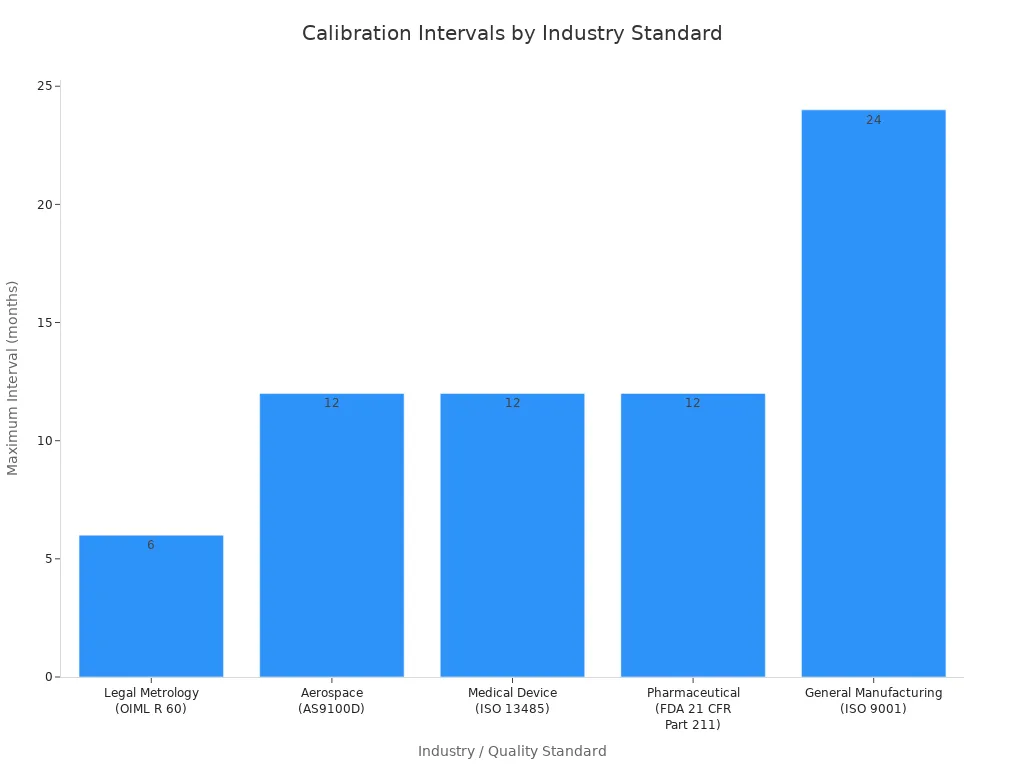
Regular maintenance extends load cell life. Visual inspection of cables, connectors, and mounting hardware detects moisture ingress points, corrosion, and loose hardware. A daily zero reading check flags zero shift above 0.1% FS. Span verification with a known test weight confirms measurement accuracy. Cleaning with dry compressed air or a lint-free cloth avoids damage from high-pressure water jets. Calibration frequency depends on the application. ASTM recommends recalibration once every year, and more often where heavy usage or possible damage has occurred.
Webowt's digital models add self-diagnosis, real-time monitoring, and fault isolation. A single-node failure does not disrupt the entire network. This feature protects the weighing system from unexpected downtime and maintains accuracy across the operation.
Load cells are the heart of any accurate weighing system. They turn mechanical force into electrical signals through strain gauges and the Wheatstone bridge. Single-point, S-type, beam, and canister designs each serve different jobs. Capacity, accuracy, and environmental protection guide the right choice. Proper installation and regular maintenance prevent drift, misalignment, and interference. A smart load cell now connects directly to a PLC or IoT gateway. It monitors its own health, reports calibration drift, and supports predictive maintenance. This shift improves accuracy and reduces downtime. Engineers who apply these selection and care practices will build weighing systems ready for automation and smart manufacturing.
FAQ
What separates an analog load cell from a digital one?
An analog load cell sends a millivolt signal that needs an outside amplifier. A digital model has a built-in 24-bit converter and sends data through CAN BUS or RS485. This design adds self-diagnosis and real-time monitoring without extra hardware.
Which load cell suits dynamic weighing tasks?
Dynamic jobs need a fast response and steady output. Webowt suggests an IP68-rated module with a sampling rate above 1000Hz, an anti-vibration design, and stainless steel construction. These features keep readings stable when loads move quickly.
Can digital modules support remote monitoring?
Yes. Webowt digital modules work with Modbus RTU, Modbus TCP, and cloud integration through MQTT. Operators get real-time alerts for sensor faults. A single-node failure does not disrupt the whole network, so maintenance teams act before downtime grows.
Why do digital load cells dominate logistics sorting?
Logistics sorting demands speed and reliability. Digital load cells respond at 1200Hz for high-speed rejection. They also offer self-diagnosis for sensor disconnection and plug-and-play corner adjustment. These features cut setup time and keep sorting lines running.
How does a technician solve analog signal interference?
Shielded cables routed away from power lines reduce noise. Junction boxes help multi-sensor systems. Upgrading to digital CAN BUS transmission removes analog interference at the source. Webowt analog load cells remain drop-in replacements when a full digital upgrade is not practical.