You have spent hours researching load cells, yet the wrong choice still fails on your production floor. This frustration is common. In fact, technical support teams report that roughly 60% of load cell performance complaints trace back to installation errors, not product defects. Before you buy, ask yourself three questions: What exactly are you weighing? Where will you install it? How precise must the measurement be? These answers guide every decision in your load cell selection guide. This article offers a step-by-step framework for weighing and force measurement. It turns your requirements into a specific product match. By the end of this guide, you'll know exactly which industrial load cell type, capacity, accuracy, and protection level your application demands.
Key Takeaways
First, figure out what you need to measure. Know which way the load pushes, what kind of load it is, and if any side forces are present.
Calculate capacity with a safety margin. Use 1.5 times for steady loads and 2 times for moving loads.
Choose accuracy that fits your needs. For trade, use certified cells, and don't buy more precision than you need.
Choose the right protection. Pick IP ratings and materials based on where you use it.
Pick the right load cell type. Think about S-beam, pancake, or single-point for your job.
Use the right mounting parts. This stops off-center mistakes and early breakdowns.
Choose the correct instrumentation. Make the signal output match your control system.
Avoid common mistakes. Watch for off-center forces, check that the unit has the right certifications, and make sure it can handle tough environments.
How to Choose a Load Cell: Define Your Measurement Task
Before looking at specs, you must know what you measure. This step decides everything about picking a load cell. You need to find the load direction, type, and any off-axis forces. Skipping this leads to errors and early breakdown. This is the basis of load cell basics.
Identify Load Direction: Tension, Compression, or Both
Application examples: lifting (tension), platform weighing (compression), universal testing (bidirectional)
Every load cell works best when force goes along its main axis. You must pick a cell that matches your load direction. Tension loads pull the cell apart. This happens in lifting tasks like hoppers hung from cranes or scales with hanging containers. Compression loads push the cell together. Platform weighing uses compression cells under a floor scale deck or inside a truck scale. Some jobs need both directions. Universal testing machines test materials in tension and compression. A bidirectional load cell handles both without damage. These examples show the needed direction.
Load direction also affects how stable your weighing system is. A cell made for pure tension will drift if you use it in compression. Mounting hardware must match direction too. Rod ends work for tension. Load buttons work for compression. Get this right first. Pick a capacity above the total hanging weight for tension cells. For compression cells, make sure the capacity covers dead load and live load together. Knowing the direction makes a load cell a reliable sensor.
Characterize Load Type: Static vs. Dynamic
Dynamic loads require faster sampling rates and higher fatigue ratings
Now find out if the load is static or dynamic. A static load does not change position or speed while weighing. For example, tank scales and inventory scales. A dynamic load moves during weighing. Filling lines, checkweighers, and conveyor belt scales see dynamic forces. Dynamic loads cause shock and vibration. For most factory jobs, you need a high sampling rate. Pick a cell with a high sampling rate for dynamic tasks. You need a higher fatigue rating for high-use jobs like constant motion sorting. Using a static cell in a dynamic setting causes errors and shortens life. This choice matters for durability. Dynamic measurements need anti-vibration design and strong build.
Account for Off-Axis Forces and Mounting Constraints
Consider side loads, bending moments, and available installation space
Off-axis forces are a common mistake when picking a load cell. A force at an angle, a side load, or a bending moment all hurt accuracy. Many errors that look like electrical issues are really setup problems. You need to think about side loads, bending moments, and space early. Industrial force sensors work best with axial loading.
Use this checklist. If any item is true, fix the mechanics before reading.
Bad Load Cell Setup checklist before you test – Stop and fix the mechanics first if any of these are true:
The force line is not clearly centered and straight through the load cell.
There is space or shape that lets the load move when force is applied.
The stack is tall, flexible, or hanging over, causing bending or twisting.
The load cell touches a softer surface that can dent or settle during loading.
The load cell needs bolting but was tested unbolted, or tightened to a different value than in the field.
An alignment plug is placed but not seated right, causing force to go through threads instead of the base.
The loading method changed between test and use (e.g., thread-loaded during test but flat-on-flat in the field).
A bad setup is a mechanical problem before it is a measurement problem. The best way to improve accuracy is to have a repeatable straight load path with controlled interfaces and stable contact surfaces.
Now apply proper techniques to avoid these issues:
Make sure the main sensing axis lines up with the force direction. This cuts down off-axis loading.
Use proper add-ons like adapters or mounting bases. They keep the cell in the right position.
Add anti-rotation features like bolt-hole patterns or keyway slots. They stop the cell from spinning.
Add overload protection with limit switches or stoppers. They stop forces that can hurt the cell. This makes sure the capacity is not too high.
Put in protective covers. They shield the load cell from outside forces and weather.
These steps are a key part of picking a load cell for real-world use. They also help you choose the right load cell for your setup limits. A step-by-step way to pick the right sensor starts here.
Calculate Industrial Load Cell Capacity with Safety Margin
Once you know what you need to weigh, you must pick the right load cell size. This step stops costly mistakes and bad readings. Many buyers skip this and pay later. Your load cell size depends on three things: dead load, live load, and extra force. Each one matters in your final math.
Sum Dead Load, Live Load, and Overloads
Include tare weight, peak forces, shock loads, and vibration
Dead load is the weight of everything the load cell holds all the time. This includes the platform, hopper, tank, or conveyor frame. You cannot take off this weight during use. Live load is the material or product you weigh. Together these two give you your starting point.
Extra forces make your math harder. Peak forces happen during sudden hits. Shock loads happen when material drops onto a scale. Vibration from machines adds constant stress. You must think about all these when you set your load cell size. For example, a hopper scale might hold 500 kg of material. The hopper itself weighs 200 kg. If you fill it from a conveyor, the falling stuff makes an impact force. Your total expected weight is more than just dead plus live.
Apply the 1.5x to 2x Safety Rule
Static applications: 1.5x; dynamic or harsh environments: 2x or higher
The safety factor guards your load cell against surprises. It also keeps it working well for a long time. For static jobs, multiply your total expected weight by 1.5. This works for tank scales and stock systems where weight changes slowly. For moving or rough jobs, use a 2x multiplier or more. Checkweighers, fill lines, and sorters need this extra room.
Think of a real example. Your platform scale has a dead load of 300 kg. The heaviest pallet you weigh is 700 kg. Your total is 1000 kg. With a 1.5x safety factor, you need a load cell size of 1500 kg. In a moving job with vibration, the 2x rule means you need 2000 kg. This math stops early failure and keeps accuracy over time. Your load cell size must always include this safety margin.
Avoid Overcapacity and Undercapacity Pitfalls
Oversized cells lose accuracy; undersized cells risk permanent damage and safety issues
Picking the wrong size causes two different problems. An oversized cell works in the low part of its range. Most cells work best between 20% and 80% of their max. Below that zone, the signal gets weak. Resolution goes down, and small weight changes are hard to see. You waste money on precision you cannot use.
An undersized cell is more dangerous. Going over the max size causes permanent damage to the sensing part. The cell might give drifting readings or stop working. In bad cases, the structure can break and create a safety risk. Falling equipment or material can hurt workers. Your final choice must balance these risks.
The right way starts with good weight data. Measure your real dead load instead of guessing. Watch for peak forces during normal use. Then add the right safety factor. This step-by-step method makes sure your load cell size matches real conditions. A properly sized cell gives reliable service for years without trouble.
Determine Accuracy and Certification Needs
Accuracy requirements shape your load cell choice just as much as capacity does. You need to match your measurement accuracy to the legal and operational needs of your application. This step helps you avoid costly compliance failures and wasted money on precision you don't need.
Match Accuracy to Trade Compliance (NTEP, OIML)
Legal-for-trade scales require NTEP Class III or OIML C3 certification
When your scale sets a price, you need legal-for-trade certification. This applies to checkout scales in stores, truck scales, and shipping scales. In the United States, regulators require NTEP Class III approval. Other countries accept OIML C3 certification. These standards confirm that your load cell meets strict accuracy limits under controlled testing.
You can't skip this requirement. An uncertified load cell makes every transaction you measure invalid. Your business could face fines, lawsuits, and lost customer trust. Check the certification before you buy. Webowt load cells have both OIML and NTEP approvals, so you can confirm compliance upfront. This quick check saves you from expensive fixes later.
Understand Key Accuracy Parameters: Nonlinearity, Hysteresis, Repeatability
High-accuracy cells achieve nonlinearity of ±0.02% FS, hysteresis of ±0.02% R.O., and repeatability of ±0.005% R.O.
Three parameters define how well a load cell performs. Nonlinearity shows how far the output curve strays from a straight line. According to Morehouse, a top load cell calibration lab, high-accuracy industrial load cells usually reach nonlinearity of ±0.02% FS. Hysteresis compares readings when the load goes up versus when it goes down. Lower numbers mean less error. High-accuracy cells reach hysteresis values as low as ±0.02% R.O. Non-repeatability measures consistency under the same conditions. High-accuracy cells achieve values as low as ±0.005% R.O.
These parameters directly affect your measurement quality. A cell with poor hysteresis gives different readings for the same weight depending on whether you add or remove material. Poor repeatability means your scale drifts between readings. Load cell calibration checks these parameters under real conditions. You should ask your supplier for calibration certificates to confirm actual performance.
Know When to Over-Specify – and When Not To
Process control may need C6; general weighing works with C3; don't waste budget on unnecessary precision
Higher accuracy classes cost more money. You must decide what your application really needs. General weighing tasks like inventory tracking and packaging work fine with C3 accuracy. These applications can handle small variations without financial impact.
Process control applications need more. Pharmaceutical dosing, chemical batching, and precious metal weighing require C6 accuracy. These tasks involve expensive materials where small errors cause big losses. The extra cost of high precision pays for itself through less waste.
Think about the factors affecting accuracy in your environment. Temperature swings, vibration, and air currents all lower performance. A high-accuracy cell in a harsh environment performs worse than a rugged C3 cell in a controlled setting. You can't buy your way out of poor installation conditions.
Your specification should match your real needs. Over-specifying accuracy wastes budget on performance you can't use. Under-specifying creates measurement errors that cost you in production losses. Review your process tolerances and legal requirements. Then pick the accuracy class that meets those demands without excess. This balanced approach ensures reliable measurements at a reasonable cost.
Select Environmental Protection and Materials
Your load cell must handle its work area. Dust, water, chemicals, and temperature changes can ruin a cell without good protection. You need to match the IP rating, material, and temperature range to your site. This step guards your money and keeps readings steady.
Pick the Right IP Rating for Your Environment
IP65 for dry indoor, IP67 for wet areas, IP68/IP69K for harsh washdown or outdoor exposure
Enclosure protection uses the IP (Ingress Protection) rating system. The first digit blocks solids. The second digit blocks water. Higher numbers mean stronger protection.
The table below shows the test conditions that define common ratings:
IP Rating | Test Type | Conditions |
IP65 | Low-pressure water jet | 6.3 mm nozzle, 30 kPa pressure, 12.5 L/min flow, 15 minutes |
IP67 | Temporary immersion | Still water, 1 m depth, 30 minutes |
IP68 | Continuous immersion | Beyond 1 m depth, manufacturer-specified duration |
Use IP65 for dry indoor spots like packaging lines or assembly stations. You need IP67 for places with occasional splashes or hose-downs. Pick IP68 or IP69K for washdown areas, outdoor use, or submersion risks. Food processing, chemical plants, and outdoor hopper scales need IP68 protection.
Many industrial applications demand IP68-rated load cells. Webowt analog load cells use welded stainless steel sealing to reach IP68. This build keeps water and dust out even during constant submersion. Your environment decides the rating. Check your worst-case exposure before you buy.
Select Load Cell Material: Stainless Steel vs. Alloy Steel vs. Aluminum
Stainless (best corrosion resistance), alloy steel (high capacity), aluminum (low capacity/cost)
Material choice affects chemical resistance, strength, and cost. Each metal fits different load cell applications.
Stainless steel offers the best corrosion resistance. It handles acids, caustics, and saltwater. You want stainless for food plants, pharmaceutical labs, and marine sites. The higher cost pays off through longer service life.
Alloy steel provides high strength for heavy capacity loads. It works in clean, dry areas where corrosion is not an issue. You can shield it with paint or plating. Uses like truck scales and heavy platform scales often use alloy steel.
Aluminum is light and cheap. It fits low-capacity scales where you do not need extreme durability. Bench scales and retail scales use aluminum cells. But you should avoid aluminum in wet or corrosive areas.
Webowt stainless steel analog load cells combine IP68 protection with corrosion-resistant build. This mix makes them a solid pick for tough environments. Your material choice should match both the load capacity and the exposure conditions.
A weighing system in a wet chemical plant needs stainless steel. A dry warehouse with heavy pallets may work fine with alloy steel. Match the material to the environment, not just to the weight.
Check Temperature Range and Hazardous Location Ratings
Compensated vs. operating range; ATEX/IECEx or FM for explosive atmospheres
Temperature affects load cell accuracy. Every cell has two temperature ranges: compensated and operating. The compensated range promises accuracy. The operating range means the cell will survive but may drift.
Different makers list different ranges. Interface, a top supplier, lists a compensated range of 15 to 115°F (-9.4 to 46.1°C). Many rivals focus on hot compensation only, listing 60 to 160°F (15.6 to 71.1°C). This comparison shows that some designs handle cold environments better than others.
You must know three facts:
Compensated range: The cell keeps its stated accuracy within these limits.
Operating range: The cell will work without damage but may show more error.
Outside both: The cell may fail or give unreliable readings.
In high-precision load cells, a 10°C rise in ambient temperature—without compensation—can result in output drift up to ±0.05% of full scale.
This drift adds up. A 20°C change can cause 0.1% error. For legal-for-trade uses, that error is not acceptable. You must check your work area against the compensated range. If your factory hits 50°C during summer, pick a cell with a wider compensated range.
Hazardous locations add another need. Areas with flammable gases, vapors, or dust need certified gear. ATEX and IECEx certifications apply in Europe and many global markets. FM certification is standard in North America. These ratings confirm the load cell will not ignite the atmosphere during a fault.
Explosion-proof load cells use special barriers and enclosures. Webowt offers stainless steel load cells suitable for hazardous environments. You must check both the temperature spec and the area class before setup. Skipping this step creates a safety risk and a compliance violation.
The environment sets the protection level. Start with your exposure conditions. Then pick the IP rating, material, temperature range, and hazardous location certification. A correctly chosen load cell lasts longer and performs better.
Choose the Right Load Cell Technology and Form Factor
After you define your measurement task, calculate capacity, set accuracy targets, and match environmental protection, you face a final decision. You must choose the internal technology and physical shape of your sensor. These two choices determine how easily your load cell integrates with existing controls and how well it fits your mechanical setup. Understanding load cell basics helps you make this choice with confidence.
Analog vs. Digital Load Cells: Which to Choose?
The first technology decision involves signal output. Analog load cells send a low-level millivolt signal that requires external processing. Digital load cells convert the signal internally and transmit data through industrial protocols. Each approach offers distinct advantages for different integration scenarios.
Feature | Analog (mV/V) Load Cell | Digital Load Cell |
Signal Output | Low-level analog signal (2.0–3.0 mV/V) | Digitized signal via internal A/D conversion |
Noise Immunity | Highly susceptible to EMI/RFI over long cable runs | Robust; uses DSP to eliminate cable-induced signal loss |
Data Transmission | Requires analog junction boxes and external filtering | Transmits RS485/CANopen data directly to PLC |
Analog sensors offer simplicity and broad compatibility. You can connect them to almost any indicator or controller without special configuration. They cost less upfront and work well in short cable runs where electrical noise poses minimal risk. When you integrate analog load cells with modern PLCs, you need an external amplifier module and signal conditioning to filter out electrical noise and residual ripple voltage. This extra hardware adds cost but keeps the system straightforward.
Digital load cells simplify integration in another way. They require a signal conditioner with an ADC, but the critical selection parameters shift to noise-free resolution and sampling rate. You eliminate the need for external noise filtering at the PLC input stage. Digital units also provide self-diagnosis and easy corner adjustment. These features reduce installation time and simplify maintenance.
Webowt analog load cells demonstrate the value of proven technology. They combine stainless steel construction, IP68 welded sealing, and OIML/NTEP certifications. This combination makes them ideal for demanding environments where durability matters more than advanced diagnostics. Webowt also offers digital modules for applications that need real-time monitoring and remote access. Your choice depends on your control system architecture and maintenance capabilities.
Select the Optimal Form Factor: S-Beam, Pancake, Single-Point, Canister, etc.
The physical shape of your load cell must match your mounting structure and load introduction method. Each form factor excels in specific applications. The table below compares common load cell types and their best-use scenarios.
Load Cell Type | Installation Requirements | Best-Use Scenarios |
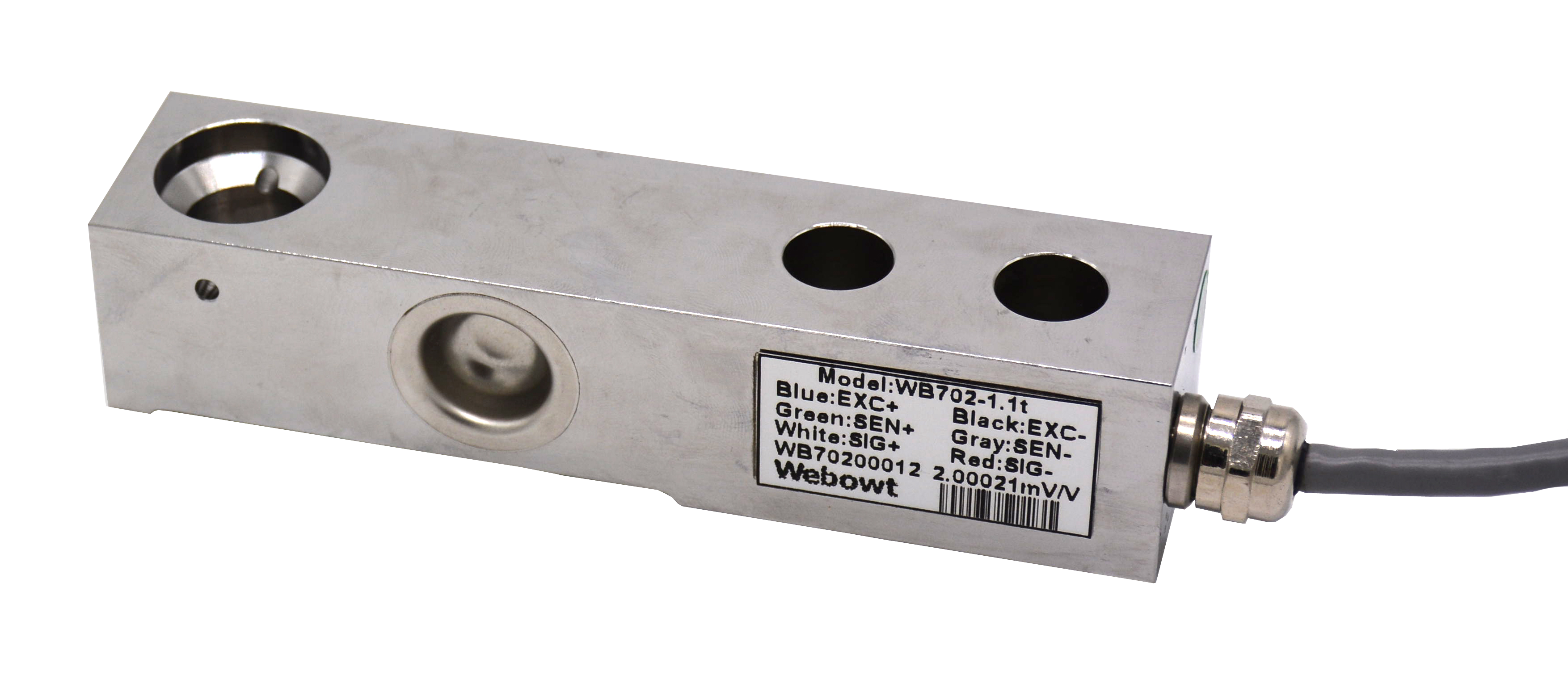
S-beam | Top and bottom threaded through-holes; requires rod-end bearings or tension weigh modules to avoid bending/torque | Tension/compression measurement; crane scales, hopper scales, test machines |
Single point | Installed underneath a platform; loading area must be centered under platform, not the load cell | Lower capacity bench scales; off-centre loading applications |
Canister | Vertical loading through top and bottom; rocker column (unthreaded) design provides better side load protection | High-capacity weighing (e.g., truck scales); resistant to bending and sideloading |
Load Cell Type | Installation Requirements | Best-Use Scenarios |
--- | --- | --- |
Pancake | Central threaded hole for tension/compression | High endurance, high fatigue life, high-capacity in-line measurements; resistant to off-axis loading |
S-beam | Female threads for mounting | In-line processing, automated control feedback (e.g., wire crimp pull testers) |
Column/Canister | Robust construction | High capacity compression applications (e.g., CNC machine vise clamping force test) |
S-beam load cells work well for tension applications like crane scales and tensile strength testing. They also handle compression tasks when you mount them correctly. Pancake cells offer a low-profile design with high fatigue life. You will find them in dynamometers and fatigue testing across aerospace and automotive industries. Single-point bending beam cells deliver high accuracy for platform scales in food processing and packaging. Canister cells handle high capacity loads with accuracy and durability in harsh environments like mining and shipbuilding.
Your application dictates the right form factor. A hopper scale hanging from a support beam needs an S-beam or canister cell. A bench scale in a packaging line works best with a single-point cell under the platform. A truck scale requires multiple canister cells distributed across the foundation. Each load cell type serves a distinct purpose in the broader weighing system.
Verify Mounting Hardware and Installation Constraints
Proper mounting hardware ensures your load cell sees pure axial force. Poor mounting introduces off-axis errors that degrade performance and shorten service life. You must verify that your mounting accessories match your load cell type and application.
Several mounting accessories play critical roles in load introduction:
Clevis pins and brackets allow rotation around the pin axis. This feature matters for crane scales. You must size the pin shear strength to exceed the cell's overload rating.
Spherical washers compensate for angular misalignment when you use direct threaded-stud mounting. Omitting them introduces side-load error.
Rod-end bearings provide self-aligning connections. They absorb small misalignment and ensure the cell sees pure axial load.
Additional mounting kits protect against lateral forces and tilting. Anti-tilt or self-aligning mounting kits prevent horizontal or torsional stresses from impacting measurements. Lateral restraints stop unwanted movement. Vibration-dampening elements ensure stable readings in environments with machinery or traffic. General mounting kits handle minor misalignments, thermal expansion, and shock loads.
You must also consider the load cell applications in your facility. A tension cell with rod-end bearings works well for a hopper scale that swings slightly during filling. A compression cell with a self-aligning mount suits a platform scale on an uneven floor. The right hardware turns a good load cell into a reliable measurement system.
These mounting considerations apply to all industrial force sensors. Whether you choose analog or digital technology, the mechanical installation determines your final accuracy. Take time to verify alignment, secure mounting, and proper load introduction. This attention to detail prevents the most common causes of premature failure and inaccurate measurements.
Pick Instrumentation and Signal Conditioning
Your load cell sends out a raw signal. That signal needs processing before your control system can use it. The right equipment turns the tiny electrical change into a readable weight value. This step finishes your weighing system and decides how well it works every day.
Select Amplifiers, Indicators, and Data Loggers
Match output (mV/V, 4-20 mA, digital) to your control system input
You must match your load cell output to what your controller accepts. Analog load cells send a low-level millivolt signal. Most PLCs cannot read this signal directly. You need an amplifier or transmitter to change it.
A weight transmitter changes the mV/V signal into a standard industrial output. For example, the LCT-6 Analog Weight Transmitter gives a precise 4-20mA current loop output. This current loop supports cable runs up to several hundred meters without losing signal quality. It mounts on a DIN rail and works across a wide temperature range. This makes it a good choice for control cabinets.
When you pick an amplifier, check the key specs. The ADC resolution sets the smallest change you can detect. Converters range from 16-bit to 24-bit resolution. A 24-bit converter gives finer detail, though real-world resolution always faces noise limits. The excitation voltage must stay stable and regulated, usually 5V or 10V DC. Your load cell output is tied to this voltage. A 0.01% change in excitation causes a 0.01% change in the measured output.
Webowt's ID series analog indicators connect directly to their load cells. These indicators show weight values and provide setpoint outputs for process control. You can also send the signal to a data logger for recording trends over time. Choose the device that fits your operator needs and control setup.
Integrate with PLCs, SCADA, or Wireless Networks
Digital load cells simplify integration; analog requires proper ADC modules and shielded cables
Your integration path depends on your load cell technology. Digital load cells make the process easier. They send data through protocols like Modbus RTU or Modbus TCP. Many Webowt modules support these standards. You connect them directly to your PLC or SCADA system without extra conversion hardware.
Analog load cells need more steps. You need an ADC module in your PLC rack or a standalone transmitter. The transmitter changes the mV/V signal to a format your controller reads. This adds hardware but keeps your system flexible. You can pick from various output options including 0-10V, 4-20mA, or RS-485 Modbus.
Think about your maintenance team's skills. Digital systems offer self-diagnosis and remote monitoring. Analog systems are easier to troubleshoot with basic tools. Your choice affects how quickly your team can find and fix problems. The right integration approach cuts downtime and keeps your weighing system reliable.
Verify Power Supply, Cable Routing, and Noise Immunity
Use twisted-pair shielded cables, keep signal wires away from power lines, and verify excitation voltage limits
Electrical noise corrupts weak load cell signals. You must protect your measurement from interference sources in your facility. Proper cabling and routing prevent most noise problems.
Use shielded cables with a conductive layer of braided copper or aluminum foil. This layer blocks electromagnetic interference. Ground the shield at one end only, usually at the indicator or data acquisition system. This sends intercepted noise away safely without creating ground loops. Strip wires carefully to expose clean metal. Secure each wire firmly to its terminal. In places with vibration, use locking washers or thread-locking fluid to keep connections tight.
Keep signal wires away from power lines and motor cables. Route them in separate conduits when possible. For cable runs over 20 meters, think about sense wires. These wires check voltage at the load cell and adjust for voltage drops. This keeps signal clarity over long distances.
Check that your excitation voltage stays within the load cell's rated limits. An unstable power supply adds errors into every reading. Use a regulated power source made for instrumentation. These steps keep your measurement accurate despite the electrical noise common in industrial settings.
Avoid Common Pitfalls When Choosing an Industrial Load Cell
Even careful buyers make mistakes. Three common errors cause most field failures and costly rework. Knowing these traps helps you avoid them when you pick your next load cell.
Ignoring Off-Axis Loading and Side Forces
Leads to systematic errors and premature cell failure
Off-axis loading happens when force does not travel straight through the sensing element. Even a small side load adds error to every reading. This error does not go away. It stays the same. Your scale shows the same wrong number each time.
Mechanical damage follows. A side load bends the internal strain gauge structure. After many cycles, the metal gets weak. The load cell drifts or stops working. The load cell's capacity is permanently reduced. You lose production time. You pay for a replacement. All because the mounting did not keep the force lined up.
Check your mounting hardware before you install. Use rod-end bearings for tension cells. Use self-aligning mounts for compression cells. Make sure the force line goes through the center of the cell. Do not trust your eye. Use a straightedge or laser to check alignment. A few minutes of careful setup saves months of trouble.
Skipping Legal-for-Trade Certification (NTEP/OIML)
Uncertified cells invalidate trade measurements and expose your business to liability
Certification is not optional for commercial scales. When customers pay by weight, regulators require proof that your scale meets accuracy standards. In the United States, NTEP Class III certification is required for load cells used in commercial transactions. If you skip this certification for a legal-for-trade application, state weights-and-measures authorities will reject the scale at setup. You will need to replace the non-certified equipment.
Using non-certified equipment exposes your business to chargebacks, fines, and failed inspections. The product giveaway alone eats into profit margins over time.
Check certifications before you buy. Webowt offers load cells with both OIML and NTEP approvals. This upfront check prevents compliance issues. Ask your supplier for a copy of the certificate. Match the model number to the certification listing. This simple step keeps your business safe and avoids costly rework later.
Over-Specifying Accuracy While Under-Specifying Robustness
A fragile high-accuracy cell in a dirty, high-vibration environment will drift more than a rugged, sealed cell with moderate accuracy
High precision attracts buyers. A C6 cell sounds better than a C3 cell. But accuracy means nothing if the cell cannot survive its surroundings. A fragile high-precision cell in a washdown area will fail faster than a rugged IP68 cell with C3 accuracy. The measurement environment decides real-world performance. Vibration, temperature swings, and moisture all reduce accuracy faster than the cell's internal specs. A sealed stainless steel cell with moderate precision holds its calibration longer in harsh conditions. The extra cost of high precision goes to waste when the cell drifts from corrosion or moisture entry.
Match your accuracy needs to your capacity requirements and environment. Use Webowt stainless steel load cells where durability matters most. Their IP68 welded sealing keeps water out. The stainless build resists chemicals. You get reliable measurement without constant recalibration. The best load cell for your job combines enough accuracy with enough protection to keep that accuracy over time.
When you start by defining your measurement task, then size capacity, accuracy, environment, technology, and instrumentation, you turn a confusing choice into a clear plan. Three rules protect your investment in any industrial load cell. Always use a safety margin of 1.5 to 2 times your expected load. This stops damage from sudden peaks. Check for off-axis forces that cause early failure and drift. Never skip trade certification when your scale is used for transactions. Use this checklist on your next load cell purchase, and consider a trusted manufacturer like Webowt for pre-certified, durable load cells that fit your needs. This load cell selection guide gives you a repeatable method for every weighing project.
FAQ
How do I decide between an analog and a digital load cell?
Pick analog for simple setups with short cable runs and older analog displays. Pick digital when you want self-checks, remote access, or simple corner tuning. Digital units send data using protocols like Modbus RTU. Your control system setup decides which one fits best.
What does an IP68 rating mean for my load cell?
IP68 means the load cell can stay under water deeper than one meter without damage. The maker sets the exact time and depth limits. Webowt gets this rating by welding stainless steel seals. This shield works well for washdown areas, outdoor spots, and food plants.
Can one load cell handle both tension and compression forces?
Yes. S-beam and pancake load cells read both directions. Universal testing machines often use two-way cells. You must check that the cell's rated capacity works for both tension and compression. Look at the datasheet before setup to confirm two-way support.
How often should I recalibrate my load cell?
How often you recalibrate depends on how much you use it, where it sits, and what rules apply. Legal-for-trade scales need regular checks based on local laws. Rough areas with shaking or heat changes need more frequent calibration. Many plants calibrate once a year or after any hard hit.
What is the difference between NTEP and OIML certification?
NTEP covers legal-for-trade scales in the United States. OIML certification meets global standards used in most other nations. Both prove your load cell meets strict accuracy limits. Check which certificate your local weights-and-measures office requires before you buy.
Why does my high-accuracy load cell still show drifting readings?
Drift usually comes from setup mistakes, not the cell itself. Off-center forces, loose mounting parts, or heat changes cause most drift. Electrical noise from nearby power lines also messes up signals. Check your mechanical setup and cable path before you blame the load cell.
Can I replace my existing load cell with a Webowt model without redesigning my system?
Yes. Webowt analog load cells fit right into standard systems without changes. They hook up directly to analog displays with no special wires or terminal resistors. This design cuts downtime during swaps. Check your mounting size and capacity needs match the new model before you order.


