Vietnam has become one of the fastest growing manufacturing bases in Asia, and every extra tonne of throughput eventually passes over a weighing point. Choosing among load cell suppliers in Vietnam therefore affects measurement accuracy, customs clearance and long term maintenance cost. This guide explains how the market is structured, which regulations apply to imported weighing sensors, what separates a manufacturer from a trading company, and how to verify specifications before placing an order.
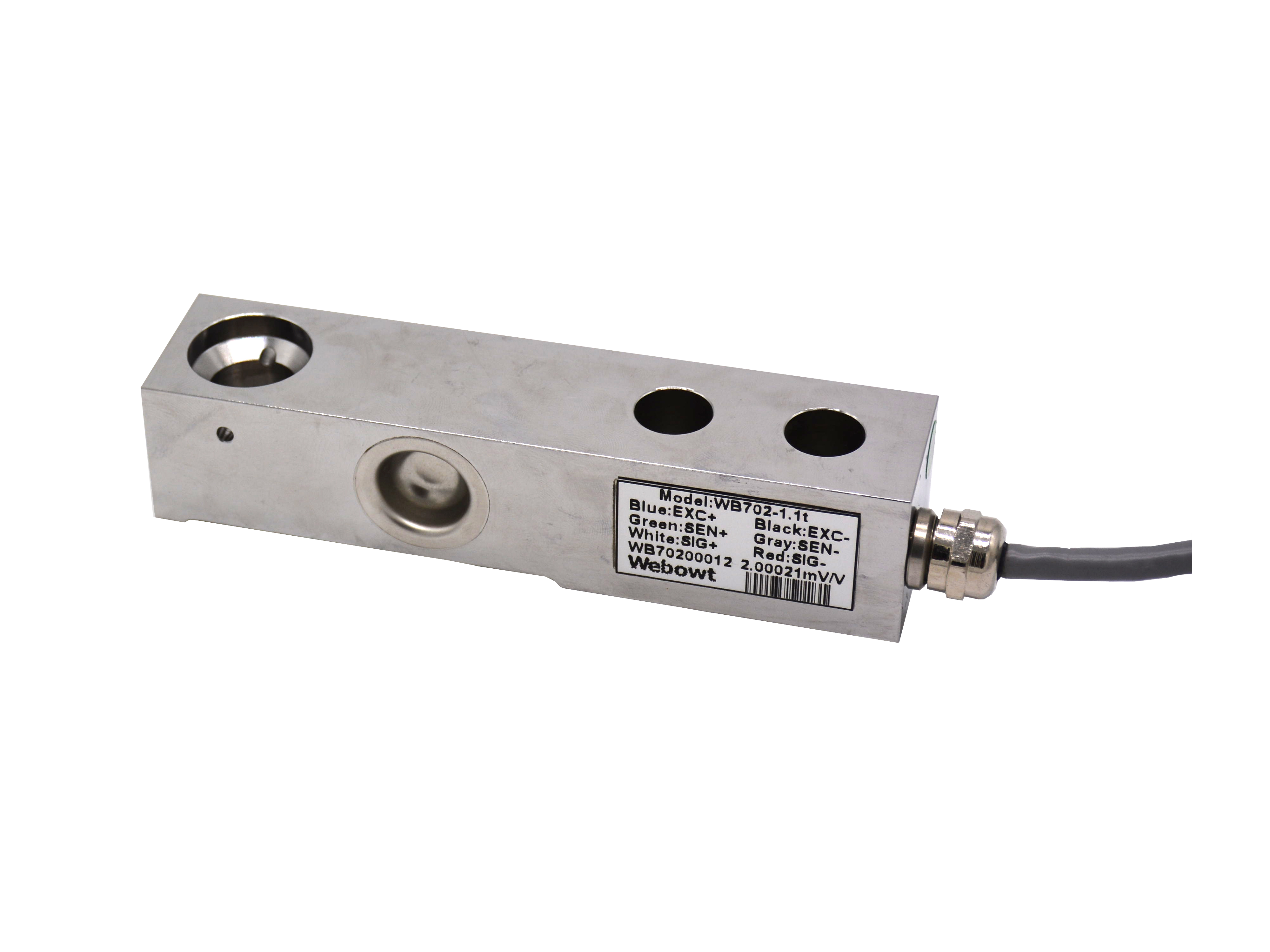
WB702 series cantilever load cell, manufacturer published product image
Key Takeaways
Industrial production in Vietnam grew about 9.3 percent in the first eleven months of 2025, and food, steel, electronics and logistics projects all depend on accurate weighing somewhere in their process.
Weighing instruments on the national compulsory verification list require type approval before production or import, and Vietnamese test procedures largely follow OIML recommendations.
A capable load cell supplier offers more than sensors: documented calibration, a clear certification scope, welded sealing options and after sales spare parts.
Analog load cells remain the mainstream choice for platform and floor scales, while digital CAN based cells add per sensor self diagnosis and weightless calibration.
Capacity range, accuracy class, sealing rating and documentation should all be confirmed in writing before an order is placed.
Why Demand for Load Cell Suppliers in Vietnam Keeps Rising
Vietnam's industrial production index rose an estimated 9.3 percent year on year in the first eleven months of 2025, with manufacturing alone growing 10.6 percent, according to the national statistics office report for late 2025. Food processing expanded by roughly 11 percent, rolled steel by 17.6 percent and motor vehicle manufacturing even faster. Almost every one of these lines includes batching, filling, checkweighing or tank weighing, and each of those steps is only as accurate as the sensor underneath it.
Investment follows the same direction. Total registered foreign investment reached USD 33.69 billion by the end of November 2025, and manufacturing takes the largest share of it, a pattern that national press reporting on early 2025 investment documented in detail. New plants need platform scales, floor scales, weighing modules and indicators from day one, which is why procurement teams increasingly compare local distributors with overseas manufacturers that ship directly into Vietnam.
In practice, most weighing hardware used in Vietnamese factories is imported or locally assembled from imported components. That makes the choice between a domestic distributor and a direct analog load cell product range manufacturer a genuine commercial decision, not just a purchasing formality, because it determines who holds the calibration records, who carries the warranty and who can supply matching parts two years later.
Import Rules a Load Cell Supplier Must Clear
Vietnam regulates weighing instruments under its Law on Measurement. The Directorate for Standards, Metrology and Quality, usually abbreviated STAMEQ, is the state agency that manages type approval, and non automatic weighing instruments belong to the list of measuring instruments subject to compulsory verification. In plain language: before a scale or sensor model can be produced in or imported into Vietnam for trade use, the model needs approval, and instruments in service are reverified on a recurring schedule.
Vietnamese verification procedures, published as ĐLVN documents, are largely aligned with the international recommendations that govern load cells and weighing instruments, OIML R76 for the finished instrument and OIML R60 for the cell itself. An earlier regional survey also recorded a common one year reverification interval for many weighing instruments in service. Exact procedures are updated periodically, so buyers should ask their importer of record to confirm the requirements that apply to a specific model and HS code at the time of ordering.
Documentation Worth Requesting Before Shipment
Type approval or conformity documentation for the finished instrument, or confirmation of which party, supplier or importer, holds it.
Calibration certificates traceable to national or international standards for the cells and modules being purchased.
OIML R60 test data or equivalent third party test reports for the sensor family, where the application is trade legal.
Load Cell Types and Capacity Ranges in the Vietnamese Market
A load cell converts force into an electrical signal through strain gauges bonded to a metal spring element. The element, the sealing method and the output electronics determine where a given cell can work: a light duty single point cell for a bench scale and a 100 tonne column module for a silo are different engineering problems, not merely different sizes.
Analog and Digital Output Options
Analog cells output a small millivolt signal that an indicator amplifies and converts, with a junction box summing several cells in larger platforms. They are mature, widely understood and economical, which keeps them the default for most platform and floor scale projects. Digital cells add a converter inside or beside the sensor: according to the manufacturer's published data for its CAN based digital family, each sensor carries its own calibration and self diagnosis, the indicator can display the status of every position, a single failing node can enter an isolated bus off state without taking down the network, and a class C6 digital cell supports weightless calibration up to 3000e. Buyers who need faster fault finding in multi sensor platforms often weigh these features against the higher unit price.
The product families below illustrate what a full range supplier typically stocks, using the WB702 cantilever load cell series and related modules as a reference point.

WB701 Analog Load Cell
Stainless steel bending beam cell commonly specified for batching, tank and hopper weighing in food, chemical and pharmaceutical plants.
View Product 
WB702SH Analog Load Cell
Low profile stainless steel cantilever cell with welded sealing for washdown and harsh environment platform weighing.
View Product How to Evaluate a Load Cell Supplier Before Ordering
Price differences between quotations usually trace back to a small number of technical and organisational factors. The checklist below is deliberately short, so it can be applied to every candidate on a shortlist within one email exchange.
Own production and calibration: a factory that pours, machines, wires and calibrates in house can trace every serial number; a trading company forwards documents from someone else.
Certification scope: OIML type approval or CPA certificates should name the exact model and capacity being quoted, not just the brand.
Sealing and materials: welded sealing, stainless construction and defined surface treatment, such as nickel plating or electrochemical polishing, decide how a cell survives washdown and corrosive dust.
Matched electronics: cells, junction boxes and analog weighing indicators and controllers from one source remove the classic mismatch between sensor output and instrument input.
After sales: spare cells, replacement junction boxes and remote diagnostic support should be part of the quotation, not an afterthought.
Questions to Ask a Load Cell Supplier
Five questions cover most of the risk: which tests were performed on this exact model, what accuracy class and Creed is certified, what is the welded sealing level, what is the minimum order and lead time for custom capacities, and who signs the calibration certificate. Buyers who want a deeper framework can follow this industrial load cell selection guide, which works through capacity, accuracy, environment and mounting step by step.
Compare Shortlist Candidates on Facts
Product pages, application cases and downloadable technical documents make it easier to compare candidates on the same terms.
For quick side by side comparison, the table below summarises the main product families a buyer will encounter when collecting quotations, with the capacity ranges published for one established product family.
| Series | Construction | Typical capacity range | Notes for load cell supplier selection |
| WB1260 / WB1260BS | Aluminum or stainless single point | From a few grams up to about 300 kg | Bench scales, counting scales and light platforms |
| WB701 | Stainless steel bending beam | About 10 kg to 500 kg | Batching, tank and hopper weighing |
| WB702 / WB702SH | Stainless steel cantilever beam | About 0.2 t to 4.4 t | Platform scales and process weighing in washdown areas |
| WBPGD / WBGD | Column type weighing module | 5 t to 100 t | Silo, tank and hopper systems with mount hardware |
| WBGW / GWA | High capacity column module | 15 t to 500 t | Truck scales and heavy industrial installations |
Capacity ranges are manufacturer published data for this product family; individual models and accuracy classes vary.
Request Load Cell Data for a Live Project
Specification sheets, capacity tables and calibration documentation can be requested directly from the manufacturer before an order is placed.
Conclusion
Vietnam's manufacturing expansion is real, measurable and heavily dependent on processes that weigh something before, during or after production. The practical differences between candidates sit in verifiable details: certification scope, sealing method, calibration traceability and the availability of matching electronics and spare parts. Buyers who collect those details in writing before ordering avoid most of the disputes that show up later in installation and verification.
For buyers comparing load cell supplier manufacturers, Webowt provides published specifications, technical documentation and direct inquiry channels for further evaluation.