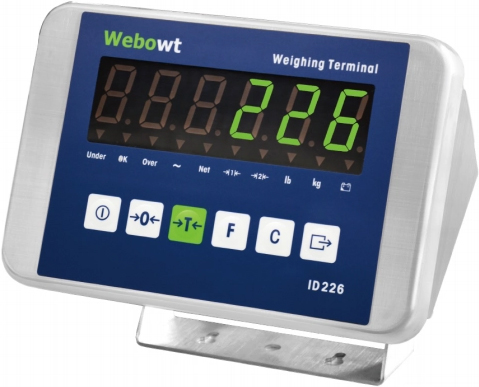
In modern industrial weighing systems, accuracy, stability, and reliability are non-negotiable. Whether used in manufacturing plants, logistics hubs, agricultural facilities, or commercial weighing stations, the weighing indicator plays a central role in converting load cell signals into readable, actionable weight data.
Yet for many buyers, system integrators, and procurement managers, selecting the right weighing indicator is not always straightforward. Questions around accuracy, connectivity, environment suitability, and long-term reliability often arise.
This comprehensive guide is designed to answer those questions clearly and practically. Drawing on real-world application scenarios and industry-standard practices, this article explains how weighing indicators work, how to choose the right one, and why selecting an experienced manufacturer such as Changzhou Weibo Weighing Equipment System Co.,Ltd. matters for long-term performance and compliance.
Key Takeaways
A weighing indicator is the core control and display unit in any electronic weighing system
Accuracy, resolution, and signal stability are key selection factors
Analog weighing indicators remain widely used for industrial applications
Environmental conditions significantly affect indicator performance
Choosing the right manufacturer ensures consistency, compliance, and long service life
What Is a Weighing Indicator?
A weighing indicator is an electronic device that receives analog signals from load cells, processes them, and displays the corresponding weight value. It also manages functions such as zero tracking, tare, calibration, and data output.
In a typical weighing system, the weighing indicator acts as the “brain,” ensuring that raw sensor signals are translated into precise and reliable measurements suitable for daily operation and decision-making.
How a Weighing Indicator Works
The working principle of a weighing indicator can be summarized in four steps:
Load cells convert applied force into analog electrical signals
The weighing indicator amplifies and filters these signals
Internal analog-to-digital conversion processes the data
The final weight value is displayed and transmitted if required
High-quality weighing indicators are designed to minimize noise interference and ensure stable readings even in harsh industrial environments.
Key Components of a Weighing Indicator
A typical industrial weighing indicator includes:
Signal amplification circuit
Analog-to-digital converter
Microprocessor for data processing
Display module (LED or LCD)
Input/output interfaces
Power management system
Manufacturers such as Changzhou Weibo Weighing Equipment System Co.,Ltd. focus on balancing these components to ensure long-term stability and consistent performance.
Types of Weighing Indicators
While weighing indicators can be classified in several ways, the most common distinction is between analog and digital systems.
Analog Weighing Indicators
Analog weighing indicators are widely used in industrial applications due to their stability, cost-effectiveness, and compatibility with traditional load cells.
Key characteristics include:
Strong resistance to electromagnetic interference
Simple system architecture
High reliability in continuous operation
These indicators are especially suitable for floor scales, truck scales, hopper scales, and batching systems.
Accuracy and Resolution Explained
Two of the most important parameters in a weighing indicator are accuracy and resolution.
Industrial weighing indicators typically support resolution levels ranging from 1/3,000 to 1/30,000, depending on application requirements.
Higher resolution is not always better—system stability and environmental conditions must be considered together.
Environmental Considerations
A weighing indicator’s performance is strongly influenced by its operating environment.
Key factors include:
Industrial-grade weighing indicators are designed with sealed enclosures and stable circuitry to maintain accuracy under demanding conditions.
Connectivity and Interface Options
Modern weighing indicators often support multiple communication options, allowing integration with broader control systems.
Common interfaces include:
RS232
RS485
Analog output
Digital I/O
These interfaces enable data transmission to PLC systems, computers, printers, and remote displays, improving automation efficiency.
Application Scenarios for Weighing Indicators
Weighing indicators are used across a wide range of industries:
Manufacturing and production lines
Logistics and warehousing
Agriculture and feed processing
Construction and raw material handling
Waste management and recycling
Each application places different demands on the weighing indicator, making proper selection essential.
Comparison Table: Typical Weighing Indicator Specifications
| Parameter | Typical Range |
| Resolution | 1/3,000 – 1/30,000 |
| Input Signal | 1–3 mV/V |
| Excitation Voltage | 5–12 V DC |
| Operating Temperature | -10°C to +40°C |
| Display Type | LED / LCD |
| Load Cell Connection | Up to 8 load cells |
These values represent commonly accepted industrial ranges rather than fixed limits.
Why Manufacturer Expertise Matters
Not all weighing indicators are created equal. Long-term reliability depends on component selection, calibration stability, and quality control.
Changzhou Weibo Weighing Equipment System Co.,Ltd. specializes in the design and production of industrial weighing indicators, with a strong focus on analog weighing solutions. By aligning product design with real-world application requirements, the company ensures stable performance, consistent accuracy, and long service life.
How to Choose the Right Weighing Indicator
When selecting a weighing indicator, consider the following:
Required accuracy and resolution
Number and type of load cells
Environmental conditions
Integration with existing systems
Manufacturer technical support
Matching these factors correctly helps avoid unnecessary cost and performance issues.
Maintenance and Calibration
Regular calibration is essential to maintain weighing indicator accuracy. Most industrial systems recommend periodic calibration based on usage intensity and environmental conditions.
Routine checks help ensure compliance with operational and regulatory requirements while extending equipment lifespan.
Future Trends in Weighing Indicators
As automation continues to advance, weighing indicators are evolving toward:
Improved signal processing stability
Enhanced communication capabilities
Greater system integration
Simplified user interfaces
Despite these changes, reliability and accuracy remain the core performance benchmarks.
Frequently Asked Questions
1. What is the main function of a weighing indicator?
A weighing indicator processes load cell signals and displays accurate weight values.
2. How many load cells can a weighing indicator support?
Most industrial weighing indicators support up to 8 load cells, depending on configuration.
3. Are analog weighing indicators still widely used?
Yes, analog weighing indicators remain common in industrial applications due to stability and reliability.
4. Does environment affect weighing indicator accuracy?
Yes, temperature, humidity, and electrical interference can all impact performance.
5. How often should a weighing indicator be calibrated?
Calibration frequency depends on usage and environment, but regular checks are recommended.

